
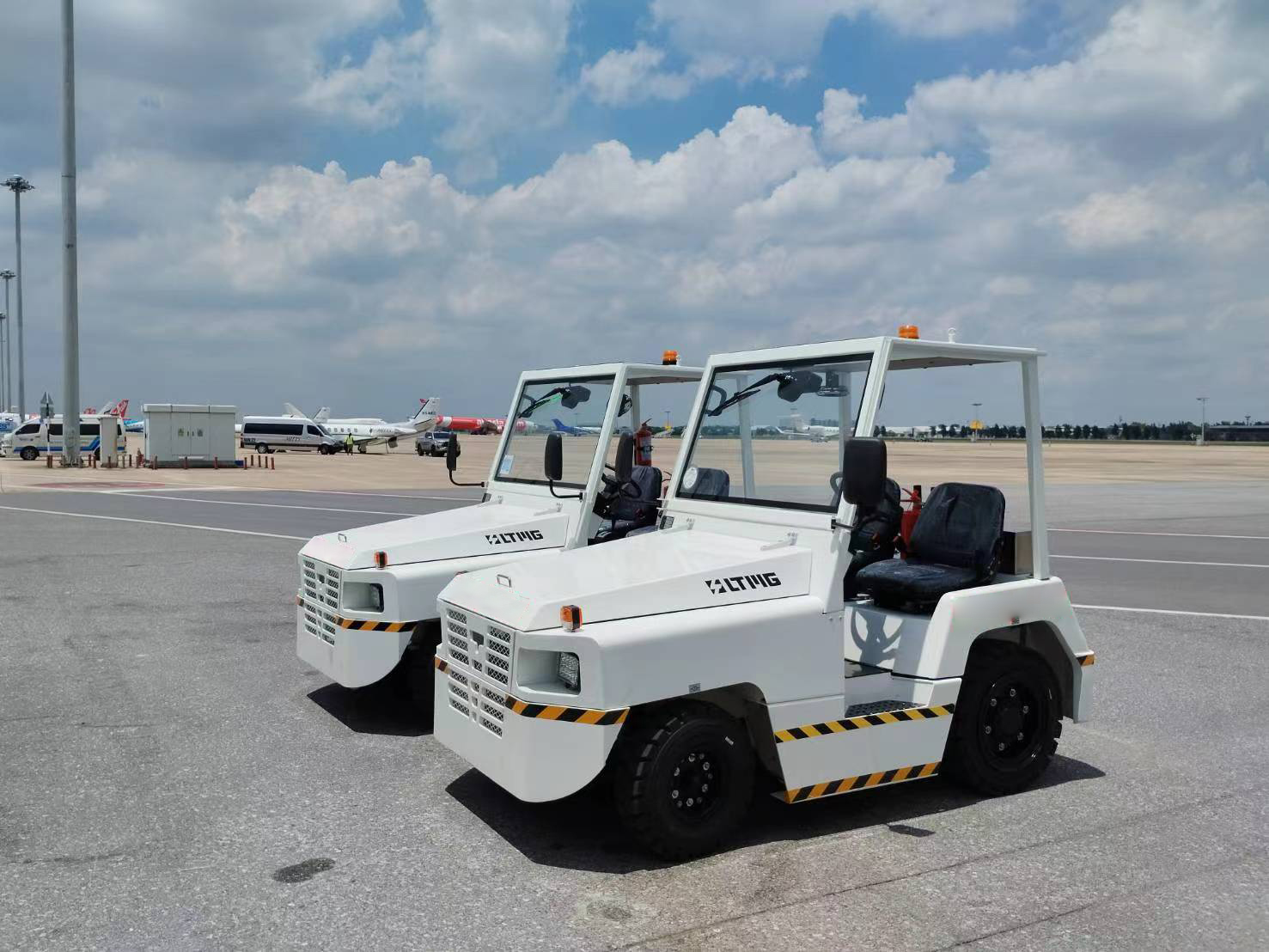
Choosing airport ground support equipment starts with understanding the job each machine must perform. Moving baggage carts, positioning an aircraft and transferring luggage into a cargo hold require different capabilities. Buying by engine power or purchase price alone can leave a ground handling team with equipment that does not fit its aircraft, routes or daily workload.
For airport operators, ground handlers and procurement teams, the practical question is simple: which equipment can handle the required work safely, consistently and at a manageable operating cost?
This guide explains three core equipment categories and the specifications to check before requesting a quotation.
What Is Airport Ground Support Equipment?
Airport ground support equipment, commonly called GSE, includes the vehicles and machines used to service aircraft while they are on the ground. Tasks include baggage transport, cargo handling, aircraft movement and other turnaround activities.
Three common categories are:
Equipment | Main task | Key selection factors |
|---|---|---|
Baggage tow tractor | Pull baggage carts and cargo dollies | Drawbar pull, approved train weight, braking and route conditions |
Aircraft tractor | Move compatible aircraft during towing or pushback | Aircraft compatibility, traction, braking and towing interface |
Conveyor belt loader | Transfer loose baggage and suitable cargo to and from aircraft holds | Working height, belt capacity, reach and positioning controls |
These machines support different stages of the turnaround. A baggage tractor delivers carts to the aircraft; a belt loader moves individual bags between the carts and the hold. An aircraft tractor handles aircraft movement under the applicable operating procedures.
Baggage Tow Tractors: Match Pulling Performance to the Route
A baggage tow tractor pulls a train of baggage carts or cargo dollies between terminals, sorting areas and aircraft stands.
Its suitability depends on more than the number of carts attached. Procurement teams should define:
Maximum combined weight of loaded carts or dollies.
Typical travel distance and required operating speed.
Maximum gradients along the route.
Surface conditions and tight turning areas.
Frequency of stops, starts and reversing.
Coupling compatibility and braking arrangements.
Drawbar Pull Is Not the Same as Towing Capacity
Drawbar pull describes pulling force, typically expressed in kilonewtons. It does not directly state how many tonnes a tractor can tow under every operating condition.
A cart train on a level surface presents a different demand from the same train starting on a slope. Rolling resistance, traction, speed and braking also affect suitability.
Ask the supplier to confirm the approved towing load for your actual route and cart configuration. Avoid selecting a tractor from a drawbar pull figure alone.
When comparing baggage tow tractors, request the rated operating conditions behind each specification, together with coupling details, turning radius and braking information.
Aircraft Tractors: Start with Aircraft Compatibility
Aircraft tractors, also called aircraft tugs, move aircraft during approved towing or pushback operations. Selection should begin with the aircraft types the equipment will serve.
Aircraft weight matters, but it is only part of the assessment. The towing method, landing gear interface, apron conditions and operating procedures must also be compatible.
Provide the supplier with:
Aircraft models and expected operating weights.
Required towing or pushback tasks.
Apron gradients and surface conditions.
Available maneuvering space.
Expected towing distances and frequency.
Required towing interfaces and accessories.
Check the Complete Towing Arrangement
For a conventional towbar tractor, confirm the compatibility of the tractor, towbar and aircraft attachment arrangement. Towbarless equipment requires verification of the aircraft-specific capture and lifting interface.
Do not assume that equipment suitable for one aircraft can serve another because their weights are similar.
When reviewing aircraft tractors, request written confirmation of aircraft compatibility and the equipment configuration needed for the intended operation.
Conveyor Belt Loaders: Check Height, Reach and Control
A conveyor belt loader transfers loose baggage and suitable cargo between ground level and an aircraft hold.
The most useful starting point is the aircraft cargo door height range. The loader must reach the required position while maintaining a suitable approach angle and clearance.
Other important checks include:
Minimum and maximum working height.
Usable belt width and conveyor length.
Permitted load and load distribution.
Belt speed and direction controls.
Operator visibility during positioning.
Emergency stops and protective features.
Maintenance access and inspection requirements.
Plan for the Full Aircraft Mix
Equipment that fits one aircraft may be unsuitable for another. Check the required working envelope across the fleet, including changes in aircraft height during loading and unloading.
Also distinguish between an individual item weight limit and the total permitted conveyor load. Both can affect what the machine is allowed to handle.
For conveyor belt loaders, ask for dimensional drawings and operating limits so your team can verify access before ordering.
Electric or Diesel: Which Fits Your Operation?
The power source should suit the duty cycle, local requirements and available infrastructure.
When Electric Equipment May Fit
Electric tractors can be attractive where operators want to reduce local exhaust emissions and where charging can be planned around the work schedule.
Before selecting an electric model, establish:
Operating hours between charging opportunities.
Typical and peak loads.
Daily travel distances.
Ambient temperatures.
Charger availability and electrical supply.
Battery warranty and replacement arrangements.
A stated runtime is useful only when its test conditions resemble your operation. Ask how load, temperature and repeated acceleration affect usable operating time.
When Diesel Equipment May Fit
Diesel equipment may suit sites with established fueling infrastructure and limited charging availability.
Evaluate fuel consumption alongside engine maintenance, local emissions requirements and access to service parts. Also consider where the equipment will operate, particularly if routes include enclosed or poorly ventilated areas.
The better choice is the configuration that can reliably complete the required shift within the airport’s operating requirements.
Compare Total Cost, Not Just Purchase Price
A lower quotation does not automatically mean a lower ownership cost.
For airport ground support equipment, compare purchase price with energy use, maintenance, consumables, infrastructure and expected downtime over the same ownership period.
Ask suppliers to clarify:
Cost area | What to request |
|---|---|
Energy | Consumption estimates with stated operating assumptions |
Maintenance | Service intervals, routine tasks and required consumables |
Spare parts | Availability, delivery arrangements and recommended stock |
Batteries | Warranty terms, expected service conditions and replacement cost |
Training | Operator and maintenance training scope |
Warranty | Coverage, exclusions and claim procedures |
Support availability deserves particular attention for overseas purchases. Confirm how technical assistance is delivered and which parts should be stocked locally to keep essential equipment available.
What Should You Include in a GSE Quotation Request?
A detailed request helps suppliers recommend an appropriate model and makes competing quotations easier to compare.
Include your equipment quantity, delivery destination, aircraft or cart details, maximum loads, route conditions, operating hours and preferred power source. State any airport-specific requirements, documentation needs and required delivery dates.
For electric equipment, add the available electrical supply and charging windows. For aircraft tractors, provide the aircraft list and intended towing tasks.
LTMG’s airport GSE range provides a starting point for reviewing baggage tow tractors, aircraft tractors and conveyor belt loaders. Share your operating requirements with the team to request a configuration recommendation and quotation.
FAQ
What is the difference between a baggage tractor and an aircraft tractor?
A baggage tractor pulls baggage carts and cargo dollies. An aircraft tractor is designed for compatible aircraft towing or pushback tasks. They should not be treated as interchangeable.
How do I choose the right baggage tractor towing capacity?
Define the maximum loaded cart train weight, route gradients, surface conditions and operating speed. Ask the supplier to confirm suitability, including braking performance, under those conditions.
How long can an electric baggage tractor run on one charge?
Runtime varies with battery capacity, load, travel distance, temperature and driving patterns. Request an estimate based on your shift profile and confirm the charging time needed between shifts.